Tuesday, March 5, 2013

Balancing the Archtypes

Darkfall: Unholy Wars may still be under NDA, but that doesn't meant that there aren't topics out there that can be discussed which are public.

From the DF: Unholy Wars FAQ:

Q:
What are the classes in Darkfall Unholy Wars?

A:
Darkfall Unholy Wars does not utilize classes in the traditional sense rather, you select a role and specify two schools to focus on within that role. Roles and Schools are not set in stone and you can change between them to suit your play-style or current situation. 

Without going into the specifics of the available Roles and Schools, one major change from the original Darkfall is that players need to select a very clearly defined Role or Archtype.  This selection, while not permanent, does mean that your "current situation" must be played as this Archtype.

While hardly a unique idea, this change marks a significant deviation from the original Darkfall which allowed players to advance multiple skills and shift from play-style to play-style while mid-combat.  Watch a DF1 video and you'll see players switch from Melee to Spells and back to Melee again in mere heartbeats.

I don't think it comes as much of a shocker that with such changes, the same class warfare type forum arguing erupts over game balance.  Again, I'm not going to speak to specifics but as with every game -- such class warfare inevitable leads to the type of forum bickering I despise most in games.
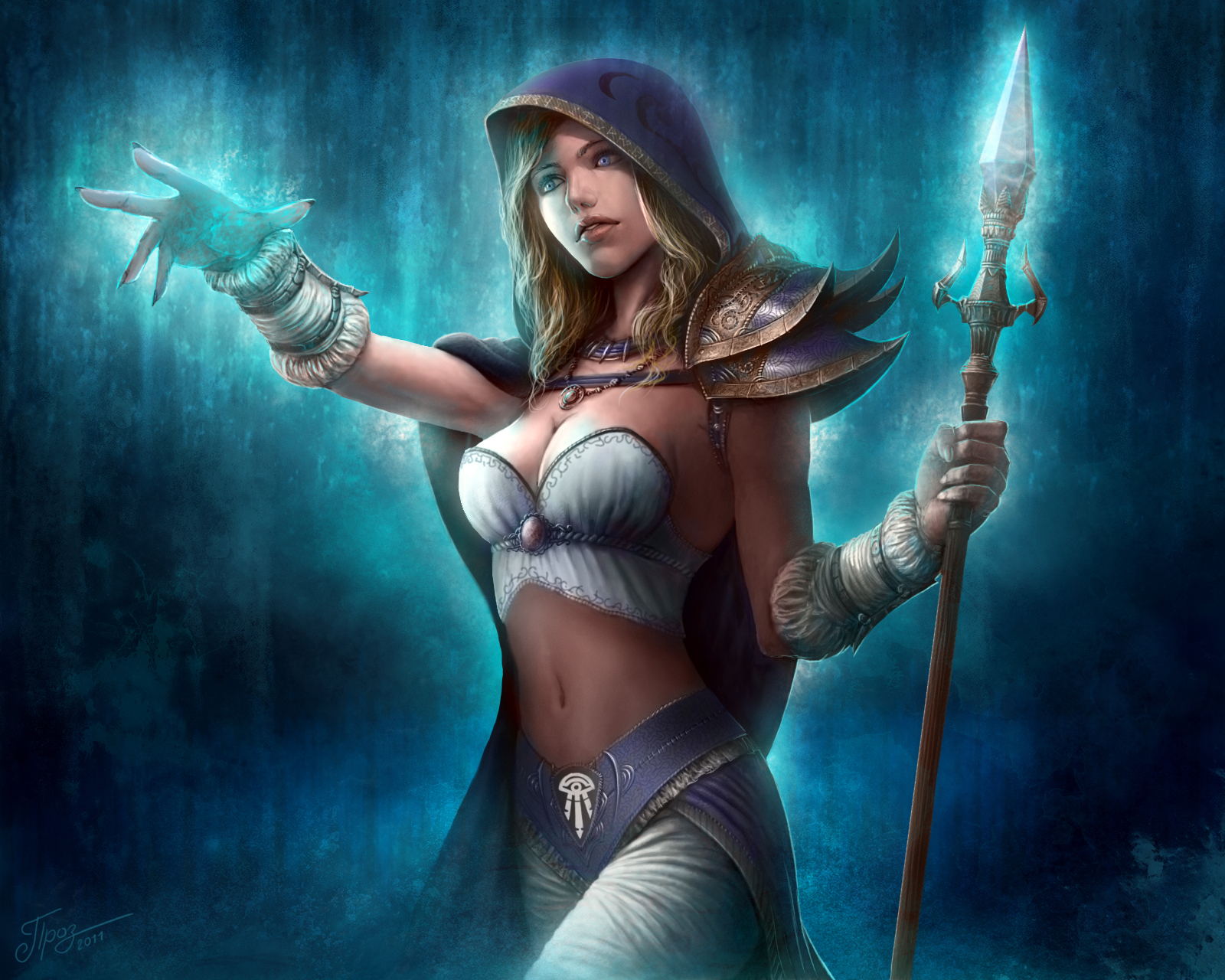
Not all Archtypes are created equal
The reality of class balance is that it's incredibly difficult to balance and it often evolves over time as players become better and/or find optimum skill usage.

Tank Archtype:  In PvP, this is by far the most forgiving Archtype because by definition, it has the most survivability.  Played poorly, a Tank can still survive and the golden rule in PvP is that you don't do any damage while dead.  This means that even a bad player can still be effective and helpful (a notion that gnaws at many players).  Typically balanced with sub-par damage and lack of range, making the Tank type too effective at dealing damage can easily make this the most OP class. By contrast, not enough damage, and good players are rendered as ineffectual as the poor players that are surviving right along-side them.

Glass Cannon Archtype:   In my opinion, the glass cannon is the most difficult Archtype to balance by a wide margin.  By definition, the cannon must do tremendous damage and be weak enough to kill quickly.  Played poorly, the Glass Cannon is easily killed.  Played well, the Glass Cannon can be un-killable even by equally skilled players.  So, do you balance for the weak or strong players?  If you balance for the strong, you'll hear no end of complaints from the weak Cannons who keep dying.  If you balance for the weak, every elite player will play a Cannon and dominate the game.

Healer Archtype:  If, like me, you think the golden rule in PvP is that you don't do damage while your dead -- then healing is the trump card. A great healer not only keeps himself alive but everyone around him. As a result, they have a huge bullseye painted on them. A tough class to balance solo because they are usually balanced on the idea that others do the damage while they do the healing. If you make them too effective at damage and healing, then the best scenario includes everyone playing Healers.

Complicating things even more is that the nature of these Archtypes tends to lend itself naturally to a sort of rock-paper-scissors thing.  Where, Tanks beat Cannons, Cannons beat Healers, and Healers beat Tanks.

Archtypes vs Homogeneity
All that said, I like having the Archtypes in games.  It provides a diversity that is fun.  Sure there are balance issues that are always evolving and need constant attention but that doesn't make it impossible.

The original "sandbox" game was Dungeons & Dragons.  Not the MMO -- the original Pen & Paper game that you played with your imagination.  And there was a reason that you started by rolling up your class and following the game rules for that class.  It provided a sense of self for who you were in the game.

The alternative is homogeneity, or uniformity, between all players. Oh sure, there are systems you could develop that limit certain things by your equipment and such but it's not quite the same as "playing a mage". :)

Tuesday, February 26, 2013

Polarizing MMO Rhetoric: Oh how I missed you!

A typical MMO discussion
After a two year hiatus from blogging, it's good to see that the same old polarizing MMO rhetoric is still out in full force.  We still have our rollercoasters, our themeparks, our sandboxes, our "hard-core pvp" crowd, our WoW care-bears, and so on..

And of course, we have our good old-fashioned commenters:

"When will people figure out no one likes PvP"
"Blame the WoW tourists" or alternately "Go back to WoW"
"Then why is EvE successful?"
"It's not 1999 any longer, people don't grind"

PvP Political Compass
Several years ago I wrote a post about what I called the PvP Political Compass.  The basic idea was that PvP in "games" is not as straight-forward or simple as "hardcore pvp" versus battlegrounds.

It's more of a graduated scale with grouping on one axis and "impact" on the other.

As I return to blogging, I am reminded of how polarized the MMO gaming community is on so many topics.

The part I find interesting here is that I believe you can create a similar "compass" for MMO features in general.  The reality is that there is no standard definition for what people like in games.

For example, all RPGs have a certain amount of "sandbox" to them simply by virtue of allowing players to make decisions about character development.  Whereas,  a very linear game like Halo is on the very far extreme with your options limited to such things as: should I drive a Warthog or a Ghost?

By no means am I calling all MMOs a sandbox, I am simply pointing out that a game -- any game -- need not be defined by the box we try to put those games in.  And yet, the fascinating part is that people who write about MMOs or follow the games work so hard to create these boxes.

It reminds me of real-life politics.  No matter your country, there are political groups which form to try and represent large bodies of people.  Very rarely do individuals agree with every single thing the group stands for -- often they only agree with some core philosophical principles -- but they'll defend that group and anyone who questions it (even parts they don't totally agree with) in fierce and often heated arguments.

The truth, if there is one, often lies somewhere blurred in the middle.  More often, there is no truth at all -- just opinion. I always find this willful blindness by the public to be infuriating.  It creates apathy.  So many people don't like the status quo but are so concerned that the other side will "win" if they give any concessions that they willingly bring the whole process to a stalemate.

The straights aren't so dire with MMOs and we all have the power to vote with our wallets. And yet, we still keep trying to put games in boxes and point fingers and blame when they fail...

Tuesday, February 19, 2013

Unholy Beta

After my triumphant return announcement, I expected to be more actively posting some thoughts on Darkfall Unholy Wars.  Thing is... NDA is still up and the beta has lasted FAR FAR longer than I ever would have expected.

What I find interesting about betas is that different people play them for different reasons.  Some people want to contribute suggestions for improvement.  Some people want to get an "early edge" so that when release happens they have a head start.  Others just want to play the game.

No matter what your reason for playing the beta, one factor always plays in everyone's mind: will I play this game for long on release?

That's the unfortunate side effect of a beta -- people can't help but judge an incomplete and unfinished product through the lens of what they expect at release.

The part I wonder about is how badly a game is hurt by an unexpectedly long beta.  Personally, I can't think of a single instance where interest  "increased" during an extended beta phase.

I'll let you draw your own conclusions about how this relates back to the DF:UW beta, but I don't think it's breaking NDA to say that the longer an extended beta lasts, the more likely interest is going to start to wane.

Excitement can easily turn into bitterness, particularly when a concrete release date isn't known and players stop wanting to invest time in a game where character progression lacks permanence.

For myself, I like the game and I "do" plan to play it at release.